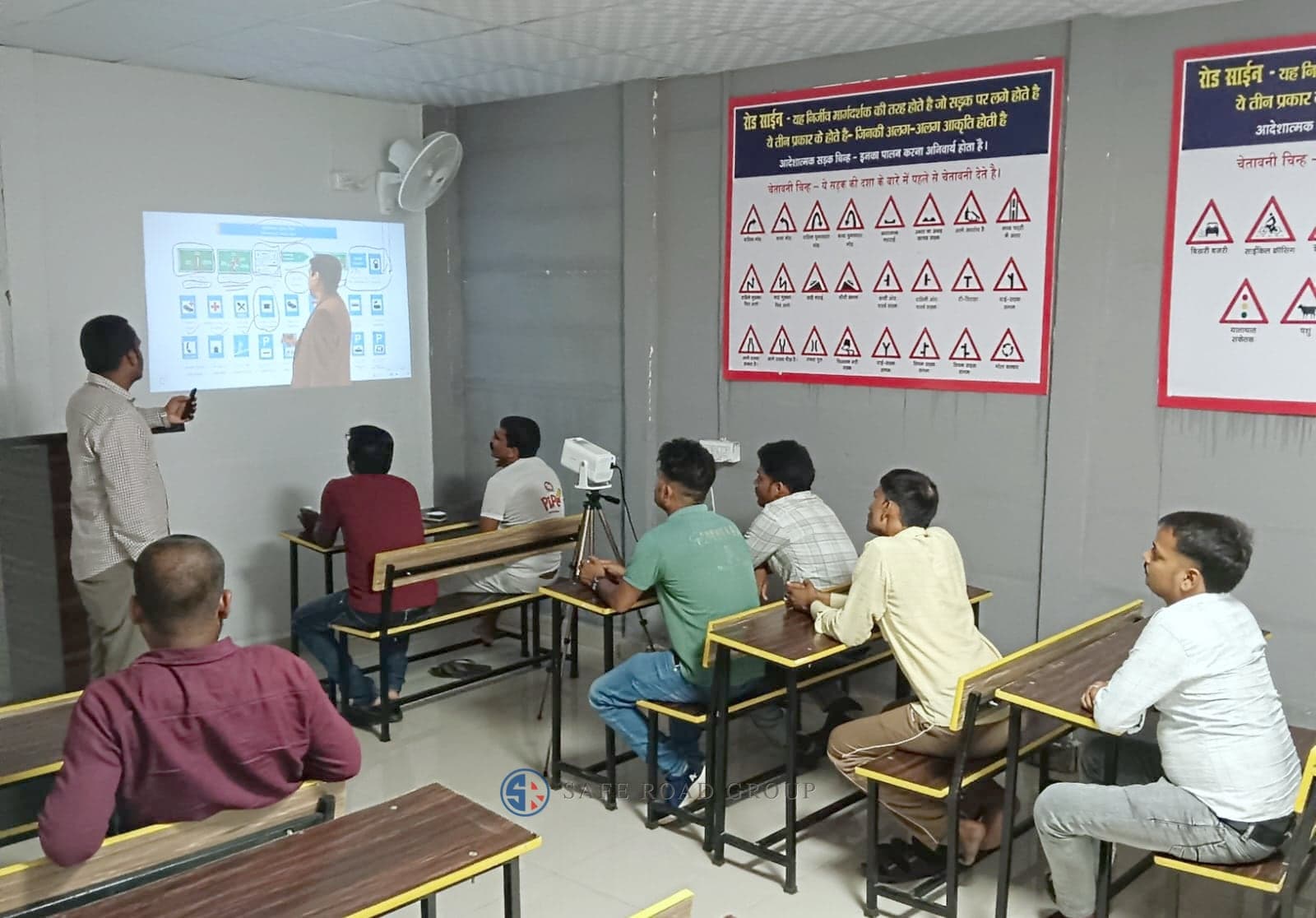
Adriving licence certifies that a person passed a test on a particular morning. It does not certify that they were ever taught. For an ordinary car that gap is a road-safety problem. For a driver taking forty kilolitres of motor spirit through a district town at two in the morning, it is a public-safety one.
Safe Road Group was formed in 2020 to close that gap from both ends: one division certifies the drivers who carry dangerous goods, the other runs Accredited Driving Training Centres where a learner is taught the prescribed syllabus and then tested on the centre’s own track.
Both halves exist because the law already asked for them. Rule 9 has long required a certificate of training before a hazardous goods endorsement may issue; Rules 31B to 31J created the accredited centre. Eastern Uttar Pradesh needed somebody to build to that standard and be inspected against it.
We have trained more than 50,000+ drivers since then — from oil marketing company depots, the transporters contracted to them, chemical plants, and fleets across India and Nepal. Increasingly we go to them: an on-site batch keeps the vehicles earning.
Behind that: a licence from the Government of Uttar Pradesh for the dangerous goods work, Form 11A accreditation from the State Transport Authority for the centres, and instructors who have spent enough time at terminal gates to know which parts of the syllabus drivers get wrong.